
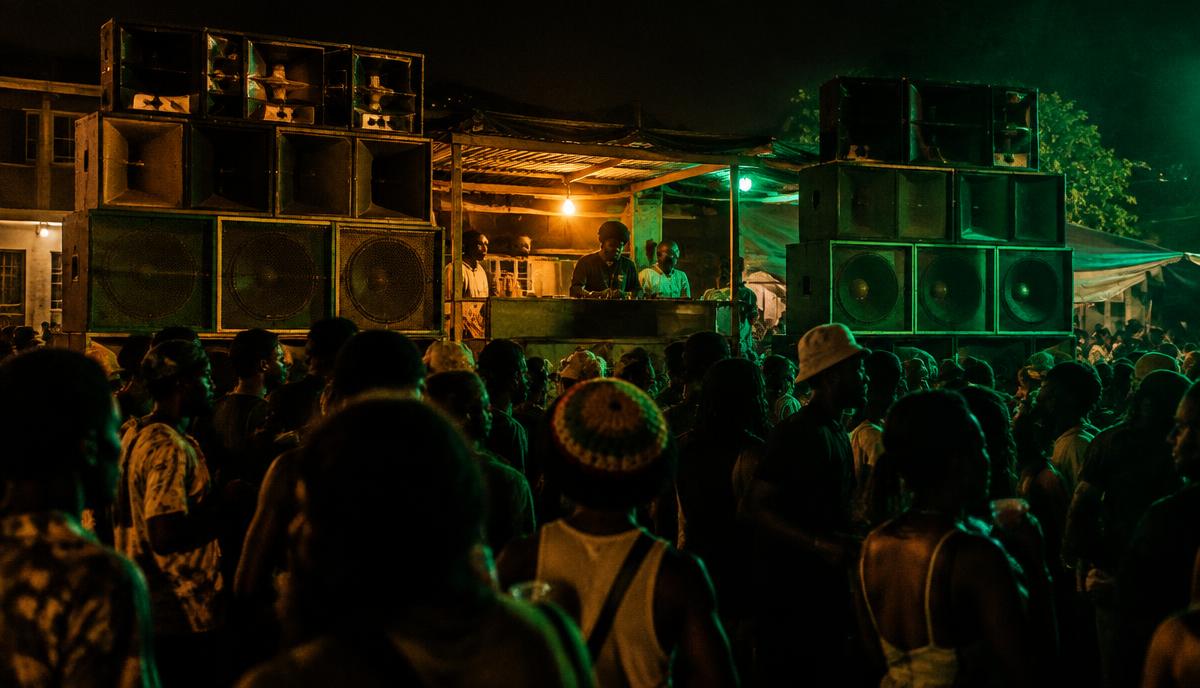
The Rattle in Your Chest
Stand near a stack of speakers at a street dance in Kingston or a basement party in Flatbush, and you don’t just hear the music; you feel it in your teeth. That rattle in your chest isn't an accident. It is the result of decades of engineering, ego, and artistry. While the world looks at dancehall through the lens of streaming numbers and viral TikTok clips, the actual DNA of the genre remains rooted in the sound system—a nomadic, heavy-duty institution that turned the DJ into a star and the selector into a scientist.
To understand modern dancehall, you have to stop thinking of it as just a genre of music and start seeing it as a competitive sport. The sound system is the arena, and everything from the way a verse is written to how a beat is mixed stems from the requirements of the dance floor. This isn't background music; it's a physical assault designed to move people who have spent their whole week working for the weekend.
The Selector as the Architect
In the early days, the "DJ" was the man on the mic—what we now call an artist or toaster—and the "Selector" was the one choosing the records. That distinction is vital. A selector isn't just a playlist shuffler; they are a psychological profiler. Their job is to read the temperature of the crowd and decide exactly when to pull up a track or let it play through.
This culture birthed the "rewind" or "pull up." When a song hits so hard that the crowd erupts, the selector stops the record, dragging the needle back to the start. It creates a tension-and-release cycle that you don’t find in Western club music. If you ever wonder why dancehall songs have such aggressive, explosive intros, this is why. Modern producers still mix tracks with this in mind—heavy intros, identifiable tags, and drops designed to make a crowd lose their minds within the first ten seconds. If a song doesn't work on a sound system, it doesn't work in the culture. The selector is the one who certifies the hit, long before a radio programmer ever touches it.
The Dubplate: The Ultimate Currency
Long before social media beefs and Twitter threads, there were dubplate wars. A dubplate is a custom version of a hit song where the artist changes the lyrics to praise a specific sound system or, more often, to disrespect a rival sound. These are exclusive, one-off recordings that act as ammunition in a "clash."
This created a shadow economy within the music industry. An artist might have a massive hit on the radio, but their status in the streets was determined by how many top-tier sounds were carrying their dubplates. If you don't have a "special" for a sound like Stone Love or Bass Odyssey, you haven't truly arrived. This tradition shaped the competitive nature of dancehall lyrics. When you hear a modern artist like Vybz Kartel or Masicka flow with a specific rhythmic aggression, they are channeling the energy of a sound clash. The music is designed to win an argument, to prove superiority, and to silence the opposition.
The Riddim Method: A Shared Foundation
One of the most unique aspects of dancehall that baffles outsiders is the "riddim" culture. In most genres, a beat belongs to one song. In dancehall, a producer drops a riddim—a single instrumental—and ten, twenty, or thirty different artists record their own versions on it. It’s an open-source approach to creativity.
This came directly from the sound system era. Selectors wanted to keep the vibe going, sliding from one artist to the next without changing the tempo or the groove. It turned the music into a conversation. You listen to see who had the best flow, the best hook, or the most clever wordplay on the same foundation. It’s a meritocracy. If five artists record on the same beat and only one gets the "pull up" in the dance, you know who won the round. Today, even as the industry moves toward single-driven releases, the "riddim pack" remains the most efficient way for a new artist to break through the noise and show they can hang with the heavyweights.
The Engineering of the Bass
We also have to talk about the physical gear. Sound systems aren't just buying off-the-shelf speakers from a retail store. Rigs like Renaissance or Metro Media are custom-built monsters designed to prioritize low-end frequencies that commercial systems can't touch. We’re talking about "scoops" and "super-tweeters" calibrated for maximum impact.
This technical requirement forced producers to change how they mix music. Dancehall basslines are often sparse, leaving room for the sub-frequencies to breathe. If the mix is too cluttered, it sounds like mud on a big system. It’s a minimalist approach that has been exported into everything from Reggaeton to Grime. The goal isn't just volume; it's clarity at high pressure. When the bass drops in a dancehall session, it should feel like a physical weight against your skin. That engineering DNA is why dancehall sounds so distinct when compared to the polished, compressed pop music on the charts.
Sound Systems in the Digital Diaspora
Sound system culture didn't stay on the island. It traveled in the suitcases of Jamaicans moving to London, New York, and Toronto. It birthed UK Jungle, influenced the rise of Hip Hop in the Bronx—where DJ Kool Herc used the sound system model to launch a global movement—and laid the groundwork for modern EDM culture. The concept of the "drop" and the "MC" all trace back to these Kingston street corners.
Today, you see the influence in how music travels globally. The "viral" moment is just a digital version of the street dance. When a song breaks in the UK or the US, it often starts in the niche dancehall sessions where selectors are still the primary gatekeepers. The technology has changed—we use controllers instead of turntables and WAV files instead of acetate discs—but the requirement remains the same: the sound must be heavy, and the delivery must be authentic. You can't fake the energy required to command a thousand people standing in front of a wall of speakers.
The Social Fabric of the Dance
Beyond the tech and the tunes, the sound system is a community anchor. In many neighborhoods, the "dance" is the economy. It’s where the jerk chicken man, the soup lady, and the beer vendors make their living. It’s a space where social hierarchies are rewritten; for a few hours, the person with the best dance moves or the sharpest lyrics is the king or queen of the night.
This communal aspect is why dancehall refuses to die, even when critics claim it’s being overshadowed by Afrobeats or Trap. Those genres are incredible, but they often lack the raw, unpolished confrontational energy that a sound system demands. Dancehall is built for the struggle and the celebration, often at the same time. It’s music that demands you show up in person and be accounted for.
The Future of the Dance
Despite the rise of streaming, the live experience remains the heartbeat of the movement. You can’t simulate the energy of a clash or the community of a street dance on an iPhone. The sound system culture taught us that music is a communal experience—it’s something you do, not just something you listen to. It requires participation, feedback, and a massive amount of electricity.
At Uncover Online, we are dedicated to keeping that spirit of live performance and raw talent alive. We aren't looking for the most polished corporate product; we want to see the next generation of artists who understand the weight of the bass and the power of the mic. We want the ones who know how to command a crowd when the lights are low and the speakers are screaming.
If you are an artist, a selector, or a creator moving the culture forward, we want to hear from you. Sign up to perform on Uncover Online and show the world what you’ve got. The stage is yours, and the speakers are waiting.