
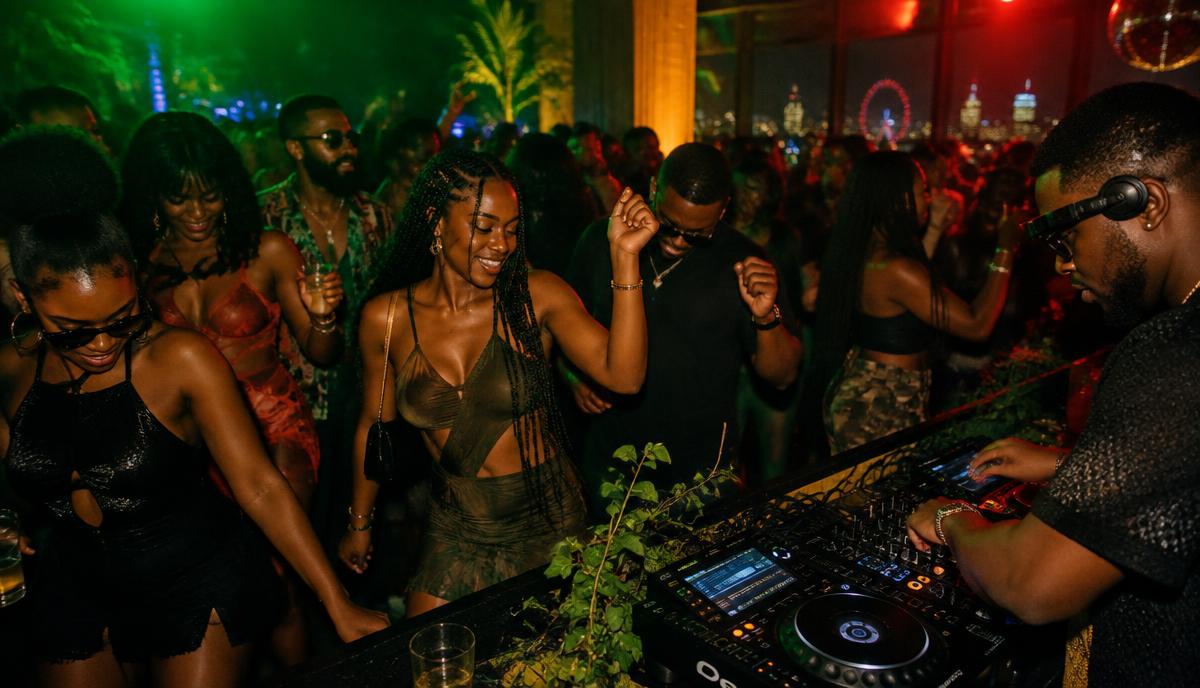
Walk into any proper session in South London, Brooklyn, or Accra right now and you will hear the friction. It is the sound of a selector transitioning from a 100 BPM Afrobeats heater into a mid-tempo Dancehall rhythm, before the bottom drops out into the log-drum rattle of an Amapiano anthem. It isn’t just a playlist shuffle; it is a conversation that has been centuries in the making. The air gets heavy. The sweat on the walls isn't just humidity; it’s the physical manifestation of three distinct cultures colliding in real-time.
For a long time, the industry tried to bucket these sounds into a generic 'Global' category—a polite, corporate way of saying 'anything not produced in a Western pop factory.' But the road knows better. While the charts might group them together for the sake of an algorithm, the dancefloor understands the specific gravity of each. We are living through a period where the distinct histories of Jamaica, Nigeria, and South Africa are merging into a singular global pulse, yet the masters of these crafts are fighting harder than ever to keep their individual identities intact. They know that if you lose the specific dirt of your home soil, you lose the soul of the music.
The Blueprint: Dancehall’s Undeniable DNA
You cannot talk about the modern global dancefloor without starting in Kingston. Dancehall is the motherboard. The concept of the 'riddim'—one instrumental, twenty different voices—is the architectural foundation for how urban music travels today. When you hear a contemporary Afrobeats track, you are hearing the ghost of the 90s dancehall drum pattern. The 'dem bow' rhythm didn't just stay in the Caribbean; it migrated, mutated, and became the skeleton for the world’s biggest hits.
Modern artists aren't just sampling; they are adopting the attitude. The bravado, the clash culture, and the heavy emphasis on the bassline come straight from the sound system tradition. In the 80s and 90s, the sound system was the newspaper, the church, and the courthouse. That raw necessity to be heard over a wall of speakers created a vocal delivery that is sharp, percussive, and inherently confrontational. Even when the tempo slows down, that Dancehall 'buss' remains.
However, Dancehall remains its own beast. It carries a specific grit and a localized patois that refuses to be watered down for radio. It’s in the way a deejay rides the version, finding pockets of space between the snare hits that a standard pop singer wouldn't dare touch. Even as it influences the world, the raw, unfiltered energy of a stone-cold dancehall set remains the yardstick for energy in any club. If the room isn't shaking, it isn't Dancehall.
The Afrobeats Explosion and the High-Life Connection
While Jamaica provided the backbone, West Africa—led primarily by Nigeria and Ghana—brought the melody and the global sheen. Afrobeats (distinct from Fela Kuti’s jazz-heavy Afrobeat) took the syncopation of traditional high-life and Fuji music and polished it with modern digital production. It’s a sound that feels like sunshine and expensive champagne, even when the lyrics are touching on the struggle.
What makes Afrobeats the current heavyweight champion of the dancefloor is its versatility. It can sit next to American R&B, UK Grime, or Caribbean Soca without breaking a sweat. It is aspirational but grounded. Producers in Lagos have mastered the art of the 'infectious' hook, creating a sound that feels familiar even if you don't speak a word of Yoruba or Pidgin. But don't let the polish fool you. The complexity of the percussion—the way the talking drums interact with the kick—is a science that requires a lifetime to master.
At its core, Afrobeats remains deeply rooted in local storytelling. It’s about the hustle, the celebration of life against the odds, and the specific rhythms of the Yoruba and Igbo experience. When an Afrobeats track hits, it doesn't just ask you to dance; it asks you to move with a certain elegance. It’s a vibe that is less about the 'clash' and more about the 'flow,' a distinction that sets it apart from its Jamaican cousin.
The Amapiano Takeover: The Log-Drum Revolution
Then comes the youngest sibling at the party: Amapiano. Emerging from the townships of South Africa, specifically Pretoria and Johannesburg, this isn't just a genre; it’s a spiritual frequency. It slowed the dancefloor down to a cruising altitude of 110 to 115 BPM. While Dancehall and Afrobeats often aim for high-octane movement and immediate gratification, Amapiano invites a trance-like state.
Built on soulful house keys, jazz influences, and that signature, distorted log-drum, Amapiano has changed the physics of the night. The log-drum isn't just a bass hit; it’s a texture. It’s a percussive, hollow rattle that hits you in the chest and stays there. It represents a shift back toward the DJ as the conductor. In an Amapiano set, the build-up is just as important as the drop. You might hear five minutes of a rolling shaker and a deep synth pad before the bass finally breaks through.
This music demands a different kind of movement—less frantic, more rhythmic and calculated. It’s the dance of the 'cool,' where the feet do the talking while the upper body stays composed. It has forced producers worldwide to rethink how they use bass, moving away from simple 808 kicks and toward textured, melodic percussion that tells its own story. Amapiano is proof that you don't need speed to create intensity.
Staying Distinct in a Unified Sound
The danger of this 'Global' sound is homogenization—the risk that everything starts to sound like a mid-tempo blur designed for a workout playlist. The best selectors and artists are fiercely resisting this. They understand that while a track might share a BPM, the 'swing' is entirely different.
Amapiano has a specific 'behind the beat' feel, a lazy but precise pocket that doesn't exist in the forward-leaning energy of Afrobeats. Dancehall has a sharp, aggressive attack—a 'gallop'—that Amapiano lacks. The magic happens in the tension between these styles. When a DJ knows how to play with that tension—respecting the roots of a South African 'private school' amapiano track before slamming into a classic 2000s dancehall juggling—the energy in the room shifts from a simple party to a cultural event.
We are seeing more collaborations than ever, but the most successful ones are those where neither artist compromises their home-grown sound. When Burna Boy jumps on a remix with a South African producer, he isn't trying to sound like he’s from Soweto; he’s bringing the swagger of Lagos to the township. When a Jamaican artist laces an Afrobeats rhythm, they bring that yard-style cadence that adds a new layer of grit. That is how the identity stays intact: through mutual respect, not imitation.
The New Road Map
The independent circuit is where this fusion is being perfected. Away from the major label boardrooms and the A&R departments trying to manufacture the next 'viral' hit, bedroom producers and sound system operators are the ones doing the real work. They are testing what works at 3 AM when the lights are low and the crowd is locked in. They are seeing how a crowd in Birmingham reacts to a beat produced in Durban, and they are adjusting the EQ accordingly.
This isn't a trend; it’s a realignment of the musical map. The center of gravity for dance music has moved. It’s no longer about what’s happening in Ibiza, Berlin, or London’s indie-rock scene; it’s about the golden triangle between Kingston, Lagos, and Johannesburg. These cities are the new laboratories of sound.
As long as the artists stay true to the specific dirt, slang, and soul of their hometowns, the global dancefloor will only get louder and more diverse. We don't need a 'Global' sound that washes everything away. We need the friction. We need the clash. We need the transition that shouldn't work on paper but makes the whole room erupt because the rhythm is undeniable.
If you are an artist, producer, or selector pushing these sounds—whether you’re chopping up log-drums in a basement or writing hooks that capture the spirit of the yard—and you want to showcase your craft to a community that actually understands the culture, we want to hear from you. Sign up to perform on Uncover Online and let the road see what you’ve got. The world is listening, but the street is watching.